What Causes Diarrhea According to TCM? 3 Common Patterns, Symptoms & Acupoints
Diarrhea can have many different causes, and according to Traditional Chinese Medicine (TCM), not all types of diarrhea should be approached in the same way.
Some people experience loose stools after eating too much cold or raw food. Others may develop sudden, urgent diarrhea after overeating greasy or spicy foods. Some people, however, have recurring loose stools together with poor appetite, fatigue and digestive weakness.
From a TCM perspective, these patterns may reflect different underlying imbalances involving the Spleen and Stomach, particularly the body’s ability to transform and transport food and fluids.
Important: The explanations below describe traditional TCM theory and should not be used as a substitute for medical diagnosis or treatment. Persistent, severe or recurrent diarrhea should be evaluated by a qualified healthcare professional.
What Is Diarrhea Called in Traditional Chinese Medicine?

In TCM, diarrhea is commonly discussed under the term “Xie Xie” (泄泻).
Traditionally, “泄” refers to loose or watery stools that may occur intermittently and tend to be less severe, while “泻” describes more forceful, urgent and watery bowel movements.
Because these two conditions frequently occur together, they are commonly discussed as 泄泻, or diarrhea.
An important principle frequently cited in classical Chinese medicine is:
“The root of diarrhea is invariably related to the Spleen and Stomach.”
In TCM theory, the Spleen and Stomach play an important role in digestion and the transportation and transformation of food and fluids. When their function becomes impaired, the normal movement and separation of clear and turbid substances may be disrupted, potentially resulting in loose or watery stools.
However, TCM does not attribute diarrhea to one single cause. Factors such as external cold and dampness, dietary excess, emotional stress, Spleen deficiency and Kidney Yang deficiency may all be considered during pattern differentiation.
3 Common TCM Patterns of Diarrhea
1. Cold-Dampness Diarrhea
Cold-dampness diarrhea is traditionally associated with exposure to cold and dampness or excessive consumption of cold foods and drinks.
From a TCM perspective, the Spleen prefers warmth and dislikes excessive dampness. When cold and dampness affect the digestive system, the normal transportation and transformation of fluids and food may become impaired.
This is also why traditional health practices often emphasize keeping the abdomen warm, particularly during periods of seasonal transition.

Common symptoms of Cold-Dampness Diarrhea
People with this traditional TCM pattern may experience:
- Loose or watery stools
- Abdominal pain or discomfort
- Noticeable intestinal rumbling
- Bloating or fullness around the stomach
- Poor appetite
- A pale or white, moist and sticky tongue coating
- A soft or moderate pulse according to TCM assessment
The Traditional TCM approach focuses on: Transforming Dampness and dispersing Cold.
In TCM, treatment is usually selected according to the individual’s overall pattern rather than the symptom of diarrhea alone.
2. Damp-heat diarrhea
Damp-heat diarrhea is another commonly discussed TCM pattern.
From a traditional perspective, it may be associated with dietary excess, particularly frequent consumption of greasy, fried, rich or very sweet foods.
When digestion is overwhelmed, TCM theory suggests that food and fluids may become stagnant, contributing to the accumulation of Dampness and Heat.

Common symptoms of Damp-Heat Diarrhea
Typical signs may include:
- Yellowish-brown, loose or watery stools
- Strong-smelling stools
- Burning or uncomfortable sensations around the anus
- Sudden and urgent bowel movements
- Abdominal pain that may feel better only temporarily after passing stool
- Thirst
- Feeling warm or feverish
- Dark or scanty urine
- A yellow, greasy tongue coating
The traditional treatment principle is: Clearing Heat and draining Dampness.
The classical formula Ge Gen Qin Lian Tang (葛根黄芩黄连汤) is traditionally associated with certain presentations of diarrhea involving Heat and Dampness.
However, herbal formulas should not be self-prescribed based solely on a symptom checklist. Proper TCM pattern differentiation is important because different types of diarrhea may require very different approaches.
3. Spleen Deficiency Diarrhea
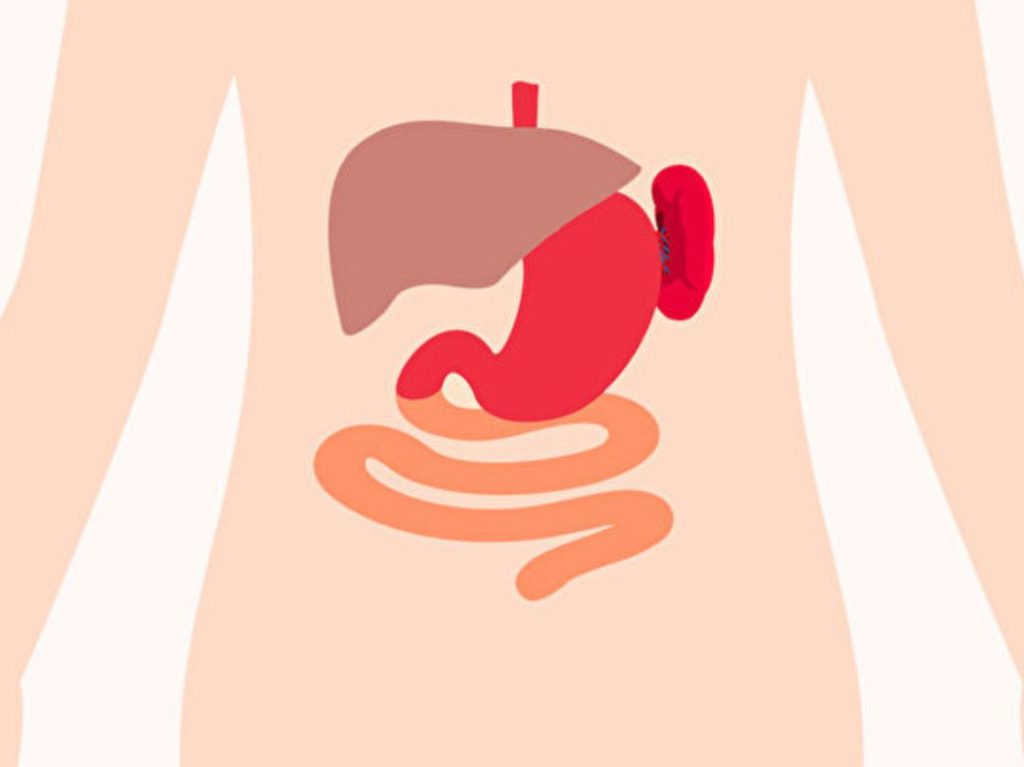
Unlike sudden diarrhea caused by an acute dietary problem, Spleen Deficiency diarrhea is traditionally associated with a weaker digestive system and recurring loose stools.
In TCM theory, this pattern may be seen in people who have experienced prolonged digestive problems, chronic illness or repeated episodes of diarrhea.
Common symptoms of Spleen Deficiency Diarrhea
Possible signs include:
- Loose stools that come and go
- Undigested food appearing in the stool
- More frequent diarrhea after eating greasy or rich foods
- Poor appetite
- Bloating or fullness after eating
- Fatigue and low energy
- Pale or sallow complexion
- A pale tongue with a white coating
- A weak, fine pulse
The traditional treatment principle is: Strengthening the Spleen, supporting Qi, harmonizing the Stomach and resolving Dampness.
The goal in TCM is not simply to stop the bowel movement, but to identify and address the underlying pattern contributing to the digestive imbalance.
Can Dampness Cause Diarrhea According to TCM?
One classical TCM principle states:
“Where there is no Dampness, there is no diarrhea.”
In traditional Chinese medicine, Dampness is considered an important factor in many digestive disorders.
When the body’s ability to transform and transport fluids is weakened, TCM theory suggests that Dampness may accumulate and interfere with normal digestive function.
This is why TCM practitioners may pay close attention to signs such as:
- Loose stools
- Bloating
- Poor appetite
- A heavy sensation in the body
- Greasy or sticky tongue coating
- Fatigue
However, these symptoms are not specific to TCM Dampness and can also occur with many conventional medical conditions. Persistent diarrhea should therefore not automatically be attributed to “Dampness.”
Two Traditional Acupoints for Digestive Support
When diarrhea occurs suddenly, people may look for simple ways to support their digestive system at home.
Within TCM, moxibustion (艾灸) is traditionally used as a warming therapy, particularly for patterns associated with Cold and Dampness.
Two commonly discussed acupoints are:
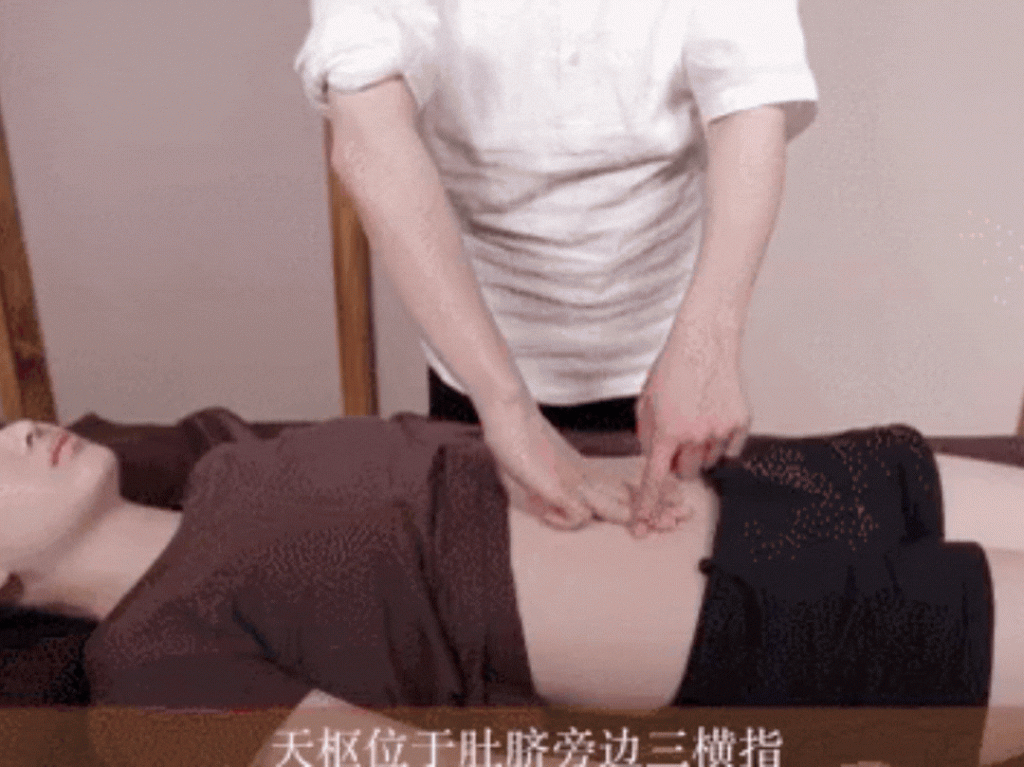
1. ST25 – Tianshu (天枢)
Tianshu, or ST25, belongs to the Stomach Meridian and is traditionally considered the Front-Mu point of the Large Intestine.
In TCM theory, it is closely associated with abdominal and intestinal functions and is commonly used in traditional acupuncture and moxibustion practices for digestive complaints.
ST25 is located on the abdomen: 2 cun lateral to the center of the navel, at the same horizontal level as the navel.
Because “cun” is a proportional measurement used in acupuncture, its exact location is normally determined according to the individual’s body proportions.
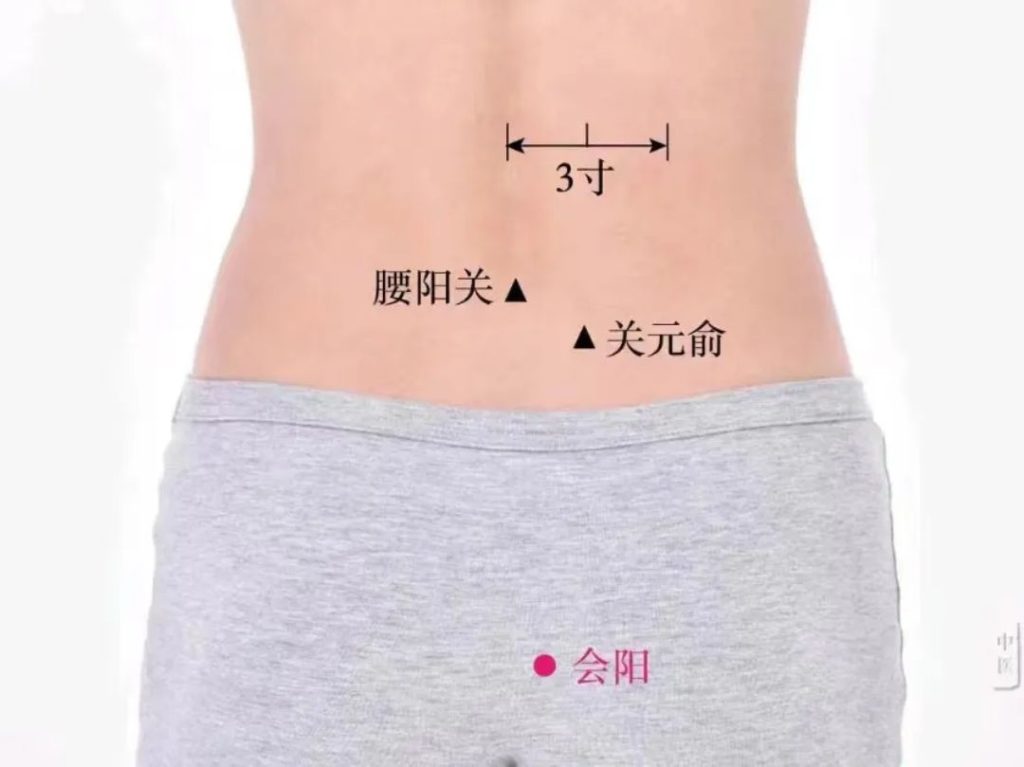
1. BL35 – Huiyang (会阳)
Huiyang, or BL35, belongs to the Bladder Meridian and is located near the sacral and coccygeal region.
It is traditionally used in TCM for conditions involving the lower abdomen, bowel and pelvic region.
BL35 is located in the sacral region: Approximately 0.5 cun lateral to the tip of the coccyx.
Due to its location near the lower spine and sensitive tissues, extra care should be taken when applying heat or moxibustion to this area.
How Is Moxibustion Traditionally Used for Diarrhea?
In traditional practice, moxibustion involves applying gentle heat from burning moxa near selected acupuncture points.
For digestive support, a traditional approach may involve warming:
- ST25 (Tianshu) on both sides of the navel
- BL35 (Huiyang) near both sides of the coccyx
A commonly described home routine is approximately 10 minutes per point, using indirect moxibustion rather than placing burning material directly on the skin.
An appropriate moxibustion box or other indirect method may make the process easier, but it is important to avoid excessive heat and burns.

Safety considerations
Moxibustion should be performed carefully. Avoid burning the skin, and do not use it over damaged skin or areas with reduced sensation.
People who are pregnant, have diabetes or circulation problems, have reduced sensation, or are unsure whether moxibustion is appropriate should consult a qualified healthcare professional before using it.
Moxibustion is traditionally considered a supportive therapy, not a replacement for appropriate medical treatment.
Is It Always Better to Stop Diarrhea Immediately?
Not necessarily.
From a TCM perspective, diarrhea may sometimes be viewed as the body’s response to an imbalance, and treatment focuses on identifying the underlying pattern rather than simply suppressing the symptom.
However, this traditional interpretation should not be taken to mean that diarrhea should always be allowed to continue.
From a modern medical perspective, diarrhea can lead to dehydration and electrolyte imbalance, particularly when it is severe or prolonged.
Therefore, the priority during acute diarrhea is maintaining adequate fluid intake and monitoring for warning signs.

Seek medical attention promptly if diarrhea is severe or persistent, or if it is accompanied by:
- Blood or black stools
- Severe abdominal pain
- High fever
- Persistent vomiting
- Signs of dehydration
- Confusion, extreme weakness or fainting
- Diarrhea in a very young child, older adult or medically vulnerable person
Frequently Asked Questions About Diarrhea and TCM
What does TCM say causes diarrhea?
According to TCM, diarrhea may result from several different patterns, including Cold-Dampness, Damp-Heat, Spleen Deficiency and other internal imbalances. Diet, external environmental factors and constitutional weakness may all be considered during TCM pattern differentiation.
What is the most common TCM pattern of diarrhea?
There is no single pattern that applies to everyone. TCM differentiates diarrhea according to accompanying symptoms. For example, watery stools with cold sensations may suggest a Cold-Dampness pattern, while foul-smelling diarrhea with thirst and a yellow greasy tongue coating may suggest Damp-Heat.
What is “Dampness” in TCM?
Dampness is a traditional TCM concept used to describe a pattern of impaired fluid metabolism and digestive function. It may be associated with symptoms such as loose stools, bloating, heaviness, fatigue and a greasy tongue coating.
It is a TCM diagnostic concept, not the same thing as a medically diagnosed infection or physical accumulation of water in the body.
Wich acupuncture points are traditionally used for diarrhea?
Commonly used points vary according to the individual’s TCM pattern. ST25 (Tianshu) is one of the best-known points associated with intestinal and abdominal complaints. Other points may be selected depending on whether the practitioner identifies Cold, Dampness, Heat, Spleen deficiency or another pattern.
Can moxibustion help with diarrhea?
Moxibustion is traditionally used in TCM as a warming therapy and may be used for certain digestive patterns, particularly those associated with Cold and Dampness.
However, evidence for moxibustion as a treatment for diarrhea is limited, and it should not replace medical care when diarrhea is severe, prolonged or accompanied by warning signs.
How long should diarrhea last before seeing a doctor?
The appropriate time depends on the person’s age, symptoms and overall health. Severe diarrhea, dehydration, bloody or black stools, high fever, severe abdominal pain or persistent vomiting warrant prompt medical attention rather than relying solely on home remedies.
Does poor appetite have anything to do with diarrhea in TCM?
Yes. In TCM, diarrhea accompanied by poor appetite, bloating, fatigue and loose stools may be associated with impaired Spleen and Stomach function. This is commonly discussed as a Spleen Qi Deficiency pattern.
Can food cause Dampness according to TCM?
Traditional TCM theory considers excessive consumption of greasy, fried, rich and very sweet foods as factors that may contribute to Dampness in susceptible individuals. Dietary recommendations, however, should be individualized according to a person’s constitution and digestive condition.
Final Takeaway

Diarrhea is not necessarily the same from one person to another.
From a TCM perspective, Cold-Dampness, Damp-Heat and Spleen Deficiency represent three different patterns that can produce loose or watery stools, but their accompanying symptoms and traditional treatment principles are different.
Rather than focusing only on stopping diarrhea, TCM emphasizes understanding the overall pattern — including stool characteristics, appetite, abdominal symptoms, thirst, tongue appearance, energy levels and other signs.
Acupoints such as ST25 (Tianshu) and BL35 (Huiyang) are traditionally used for digestive support, while moxibustion may be considered as a complementary warming therapy in appropriate cases.
Most importantly, traditional approaches should complement — not replace — appropriate medical evaluation, especially when diarrhea is severe, persistent or accompanied by warning signs.
Listen to your body, support your digestion, and seek professional care when you need it.
Looking for an experienced TCM practitioner in Singapore?
Recent Post
-
 12 Sep 2026Blood Stasis in TCM: 5 Signs of “Stagnant Blood” and How to Support Circulation
 -
 08 Sep 2026Not Just “Shang Huo”: 3 Symptoms That May Need Medical Attention
 -
 06 Sep 2026What Is “Stomach Qi” in TCM? Why It Matters and How to Protect It
 -
 05 Sep 2026What Causes Diarrhea According to TCM? 3 Common Patterns, Symptoms & Acupoints
 -
 11 Aug 2026Flu and Cough Relief: A Practical TCM Guide for the Whole Family
 -
 10 Jul 2026TCM Guide to Lower Back Pain: Causes, Stretches & Natural Relief
 -
 10 Jul 2026Chronic Pain and Fatigue? Poor Posture Could Be the Hidden Cause
 -
 18 Jun 2026TCM Liver Health: 7 Warning Signs You Shouldn't Ignore
 -
 06 Jun 2026TCM Hand Diagnosis: 3 Palm Markings You Shouldn't Ignore
 -
 05 Jun 2026Why Your Blood Sugar Stays High Even After Quitting Sugar