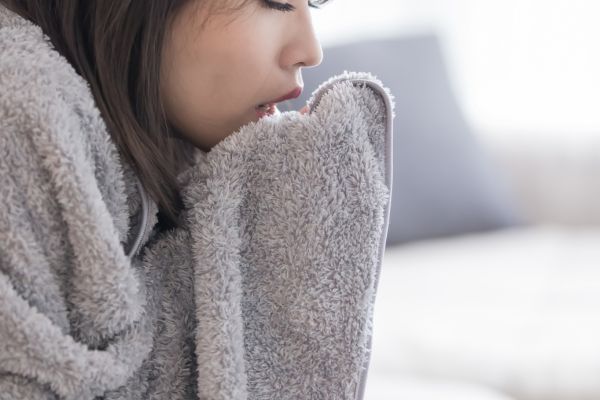
As temperatures drop, many people start to notice knee discomfort again:
Knees feel cold, sore, swollen, or tight
Difficulty standing up after squatting — needing support to straighten up
Clicking or popping sounds inside the knee when standing after sitting
Many assume this is just a normal sign of ageing.
In reality, these symptoms are often linked to knee osteoarthritis.
Knee osteoarthritis is caused by degeneration and wear of joint cartilage, leading to inflammation and pain.
Normally, the knee joint is cushioned by a layer of articular cartilage — a smooth, elastic tissue that absorbs shock during walking and movement.
However, due to:
ageing
increased body weight
long-term overuse
old injuries
this “protective cushion” gradually wears down.
Once the cartilage is damaged, the bones begin to rub against each other, causing:
knee pain
swelling
stiffness
reduced mobility
① External Injury (Acute Damage)
This type is caused by clear external forces, such as:
sports collisions
falls and sprains
sudden impacts
These injuries directly damage the knee structures and often cause immediate pain or swelling.
② Internal Damage (Chronic Strain / “Bi Syndrome” in TCM)
In Traditional Chinese Medicine (TCM), chronic knee discomfort is often classified as “Bi Syndrome”, caused by:
poor circulation of Qi and blood
blocked meridians
long-term internal imbalance
This leads to persistent pain, stiffness, or numbness in the joints.
Knee problems don’t only come from injuries.
Daily habits can slowly increase knee load and accelerate cartilage wear.
Incorrect walking mechanics
Walking should be driven mainly by the hips and thighs.
Dragging the legs or landing heavily on the feet keeps the knee under constant tension, increasing cartilage wear.
Improper exercise habits
Frequent high-impact activities like running and jumping, or sudden stops and turns, repeatedly shock the knee joint.
Lack of proper warm-up and stretching further increases the risk of ligament and meniscus injury.
Poor posture and body imbalance
Issues such as leg-length difference or uneven shoulders can tilt the pelvis, causing uneven pressure on the knees.
Over time, this accelerates cartilage wear and may affect the kneecap.
Bad sitting posture
Sitting cross-legged or with legs folded twists the knee joint and shifts the kneecap from its normal alignment.
Long-term strain can overstretch ligaments and damage cartilage.
Cold exposure to the knees
The knee is sensitive to temperature changes.
Cold air, air-conditioning, or insufficient clothing can reduce blood circulation, stiffen muscles, and decrease joint lubrication — leading to pain and stiffness.
To relieve knee discomfort, it’s crucial to relax the tight muscles around the knee.
Gentle acupressure or moxibustion can help improve circulation and reduce tension.
① Zu Wuli (ST31)
Location: Inner thigh, 3 cun below Qichong, between the adductor and sartorius muscles.
Benefits:
How to use:
Massage for 5–10 minutes daily.
② Ququan (LR8)
Location: Inner side of the knee, at the end of the knee crease, in the hollow beside the tendon.
Benefits:
Improves local blood circulation
Reduces inner knee pain and stiffness
How to use:
Massage or stimulate for 5–10 minutes daily.
③ Heyang (BL55)
Location: Back of the lower leg, 2 cun below the knee crease, between the calf muscles.
Benefits:
Promotes smooth Qi flow in the lower limbs
Relieves tension below the knee
How to use:
Massage for 5–10 minutes daily.
① Keep the knees warm
Cold reduces circulation and joint lubrication.
Wear knee warmers in cooler weather and use heat packs to ease stiffness.
② Exercise and stretch regularly
Low-impact activities such as swimming and cycling help strengthen surrounding muscles.
Stretching improves joint flexibility and promotes nutrient flow to cartilage.
③ Avoid poor sitting habits
Sit with both feet flat on the ground.
If crossing legs is unavoidable, switch sides frequently and stand up every 30 minutes.
④ Pay attention to early warning signs
Early intervention can significantly slow joint degeneration.
If knee pain, imbalance, or movement restriction affects daily life, don’t ignore it.
Guo An Tang TCM Clinic
Any questions related to Why Knees Hurt When It Gets Cold — 3 Simple Relief Methods?
Jurong West Branch
Make an appointment.
Jurong East Branch
Make an appointment.
APAC Branch
Make an appointment.
Tiong Bahru Branch
Make an appointment.
Bukit Merah ABC Branch
Make an appointment.
🟢 we are online | privacy policy
WhatsApp us